
The Achievements of Katherine Johnson
She calculated angles and human lives. At a time when computers still made mistakes, Katherine Johnson provided NASA with the precision needed to send man into space and bring him back alive.
An extraordinary scientist in the space race
In the 1960s, the whole world had its eyes on the sky. The Cold War was raging, and the United States faced the Soviet Union in a fierce race: the conquest of space.
At the heart of this scientific battle, in the corridors of NASA's Langley Research Center, a woman stood out for her extraordinary intelligence: Katherine Johnson.
Joining NASA (then NACA) in 1953, she became part of the group known as human computers, women tasked with performing complex calculations by hand for engineers.
As an African American woman in a still segregated America, Katherine Johnson had to prove not only her genius but also her legitimacy to exist in a world dominated by white men.
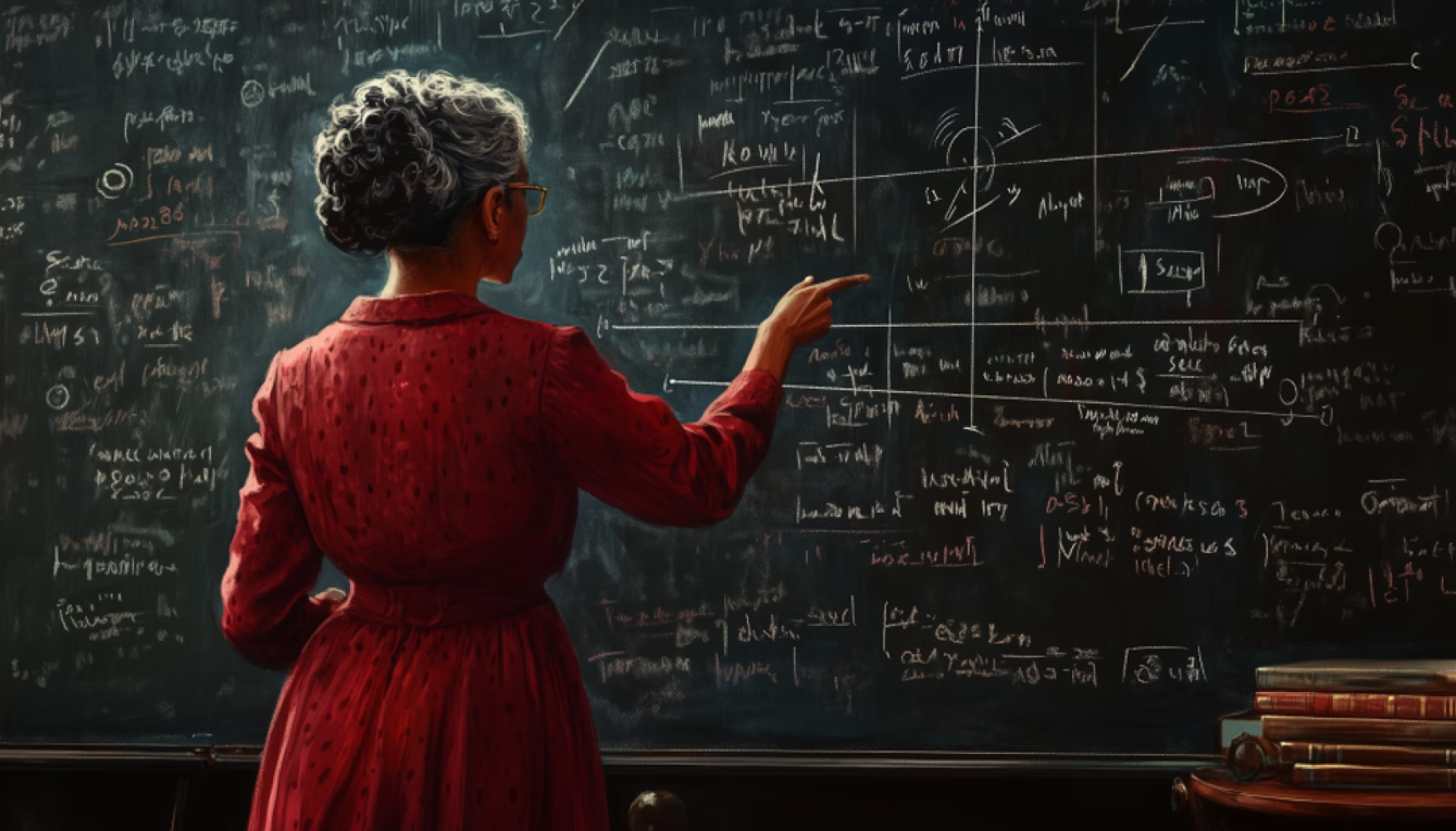
Katherine Johnson writing complex calculations on the board
Calculations that were worth a life
During the Mercury and Apollo missions, Katherine Johnson had an immense responsibility: ensuring that astronauts could leave and return safely.
Katherine Johnson excelled in analytic geometry and differential equations, essential fields for determining flight trajectories.
Her calculations involved speeds, launch angles, rotation times, and elliptical trajectories, in other words, everything that allowed a spacecraft to reach its target without getting lost in space.
At that time, the first electronic computers were still unreliable. When John Glenn, the first American to complete an orbital flight around the Earth, learned that his calculations came from an IBM computer, he refused to take off until they were verified by Katherine herself.
”“If she says it's good, then I'm going up.”
These simple but powerful words show the trust and respect his colleagues had for her.
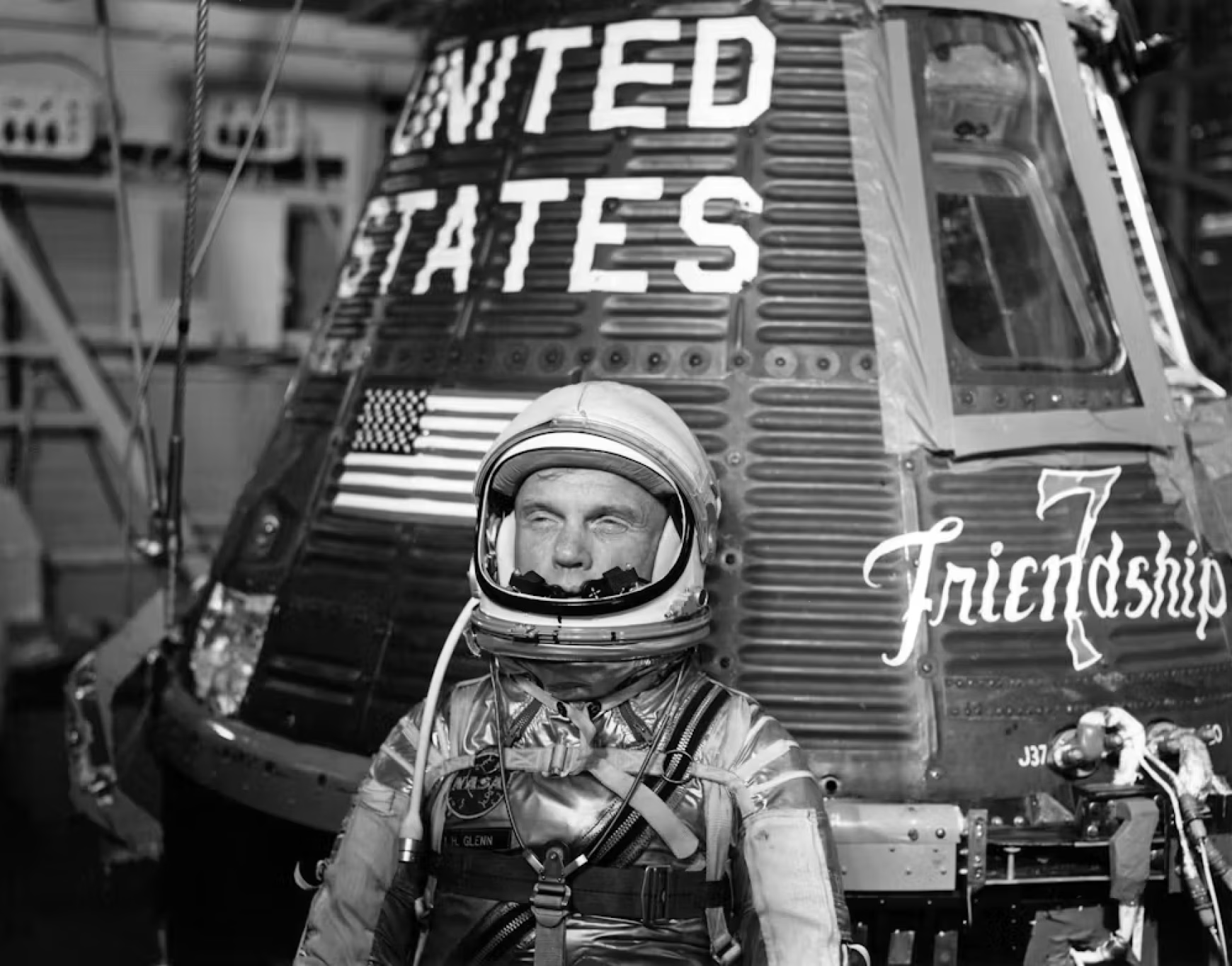
John Glenn in front of the Friendship 7 capsule
Apollo 11: The Calculation of the Century
Katherine Johnson manually calculated the trajectories of spacecraft, atmospheric re-entry speeds, and even launch windows.
In 1969, Katherine Johnson worked on the trajectory calculations for the Apollo 11 flight, which allowed Neil Armstrong and Buzz Aldrin to set foot on the lunar surface.
Her formulas notably allowed for the prediction of the atmospheric re-entry point, crucial for the module to return to Earth without disintegrating.
These calculations, done by hand, represent thousands of equations solved on graph paper, with no margin for error. Thanks to this titanic work, the astronauts were able to return safely: a scientific and human achievement.
Her equations also helped lay the foundations for modern computer programs. Many current engineers still consider her work a reference.