Katherine Johnson
Long before modern computers, Katherine Johnson was doing complex math by hand.
Thanks to her, many American space missions succeeded, and she opened the way for women and
Afro-American scientists in space.
An Exceptional Childhood
Katherine Johnson was born in 1918, in West Virginia. From a young age, she
showed real talent for math. Her parents and teachers encouraged her a lot, and she was able to take
advanced classes as a teenager.
At only 15, she entered university. Her passion for numbers and her quick
understanding of complex calculations prepared her for an important role in the history of space
exploration.
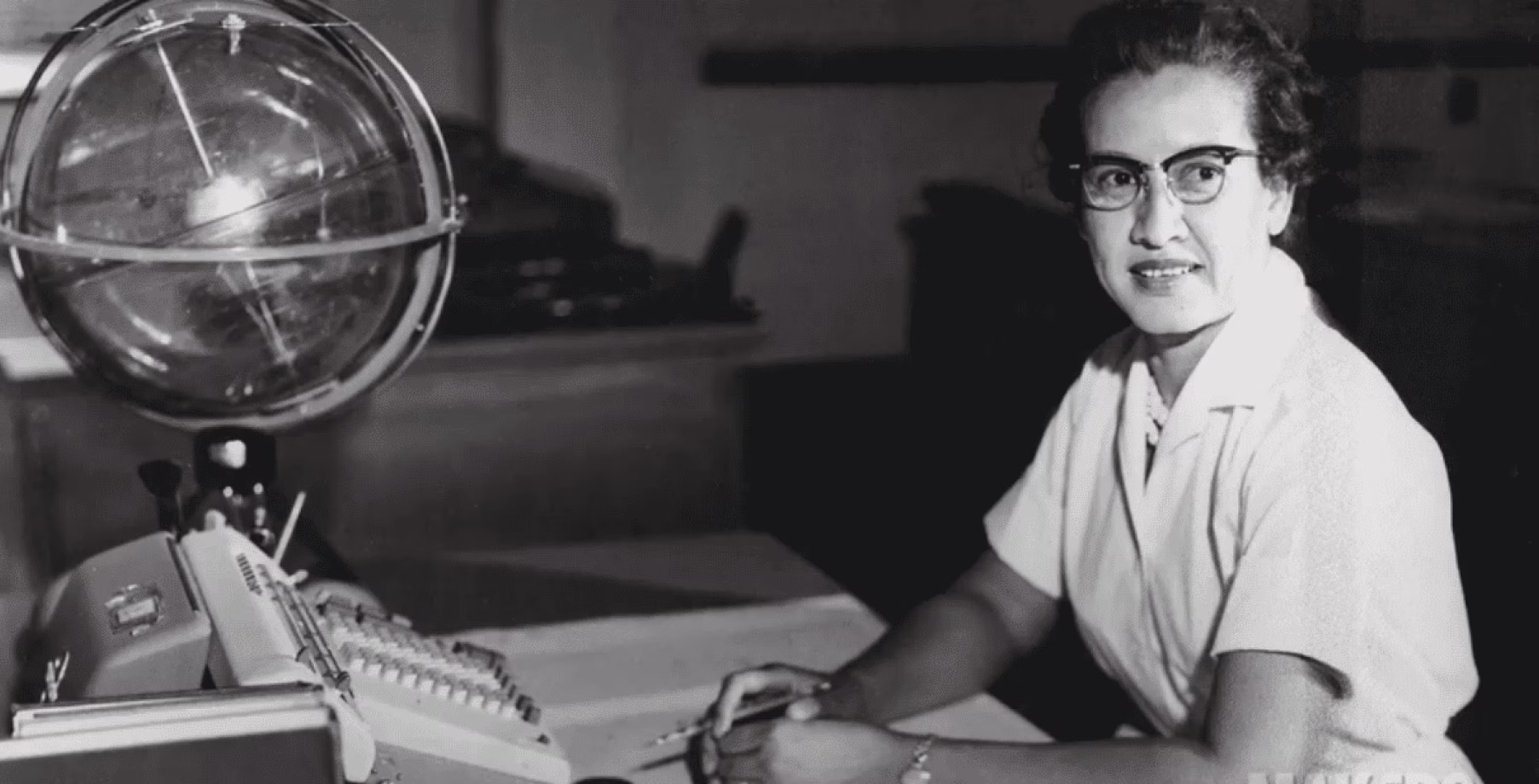
Photo of Katherine Johnson
Her Beginnings at NASA
In 1953, Katherine joined the NACA, which later became NASA. She was part of a
group of Afro-American women called the “Human Computers,” because they did all the calculations by
hand.
She quickly stood out for her accuracy and speed. Her coworkers relied on her to
check the flight paths of space missions, and her calculations were often key to the success of
launches and safe returns to Earth.

Image from the movie, Hidden Figures
The Story with John Glenn
A famous moment in her career happened in 1962. John Glenn, the first American
to orbit the Earth, asked Katherine to check his trajectory calculations before the launch of his
Mercury-Atlas 6 mission.
Glenn trusted her so much that he said:
“If Katherine says it’s good, I’m ready to go.” Thanks to her, the mission was a total success and
marked a big step for the United States in space exploration.
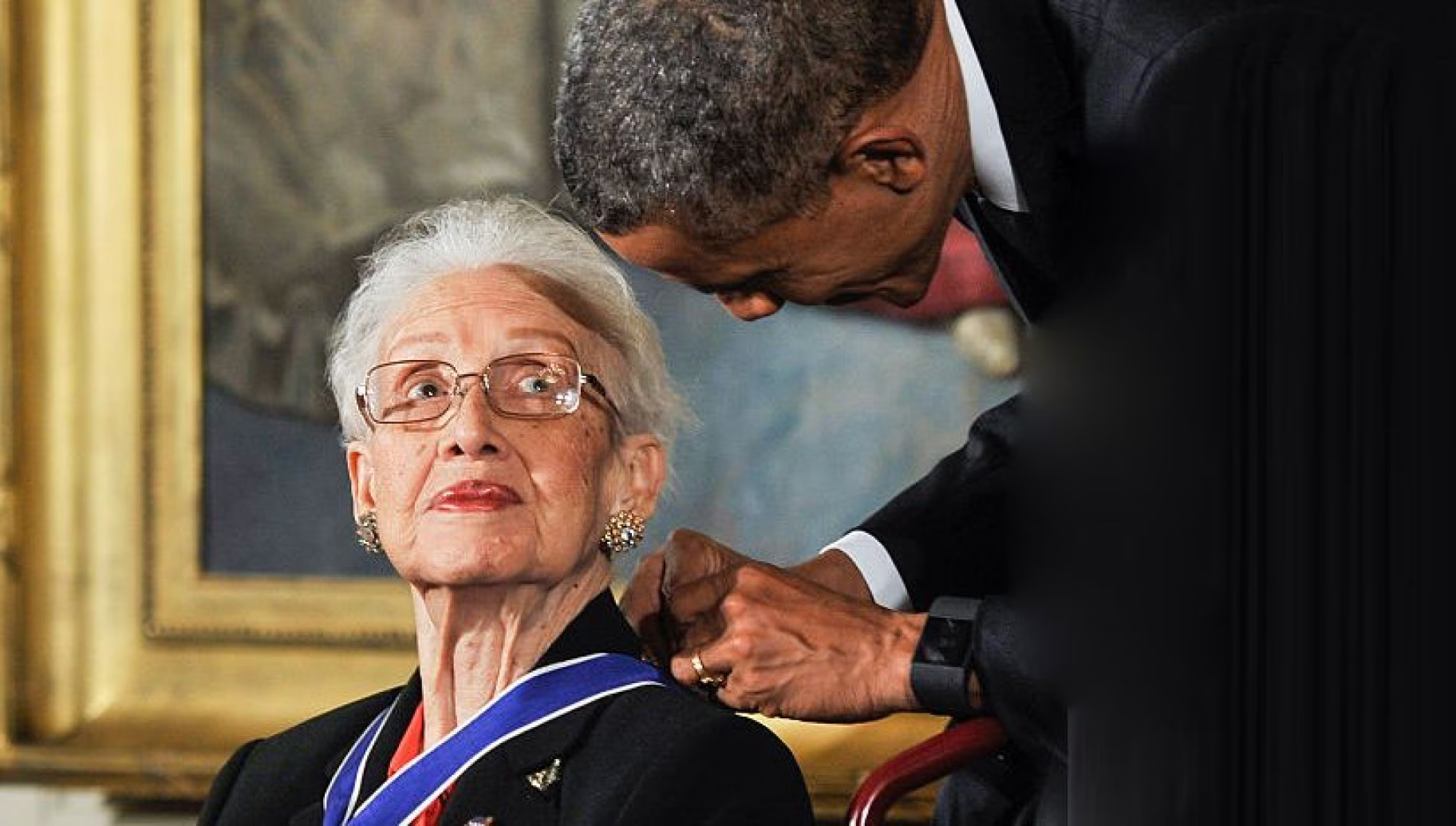
Katherine Johnson receiving the Presidential Medal of Freedom
Recognition and Inspiration
In 2015, Katherine Johnson received the Presidential Medal of Freedom from
Barack Obama, one of the highest honors in the United States.
Then, in 2016, the movie Hidden Figures was released, telling part of her
incredible story. It finally put her amazing work in the spotlight and gave her the recognition she
didn’t get during her career.
Today, Katherine is a true inspiration for young girls and for anyone who loves
science. She proved that with hard work and passion, you can achieve great things, even when the
world seems against you.
Posted by Lucie Garcia
October 14, 2025 at 10:00 a.m.
